Clinical Assessment
Structured primary assessment using the ABCDE approach. Trainees practice situational awareness, vital signs monitoring, blood gas analysis, and FAST ultrasound in a time-critical ward setting.
Interprofessional Ward Emergency Simulation
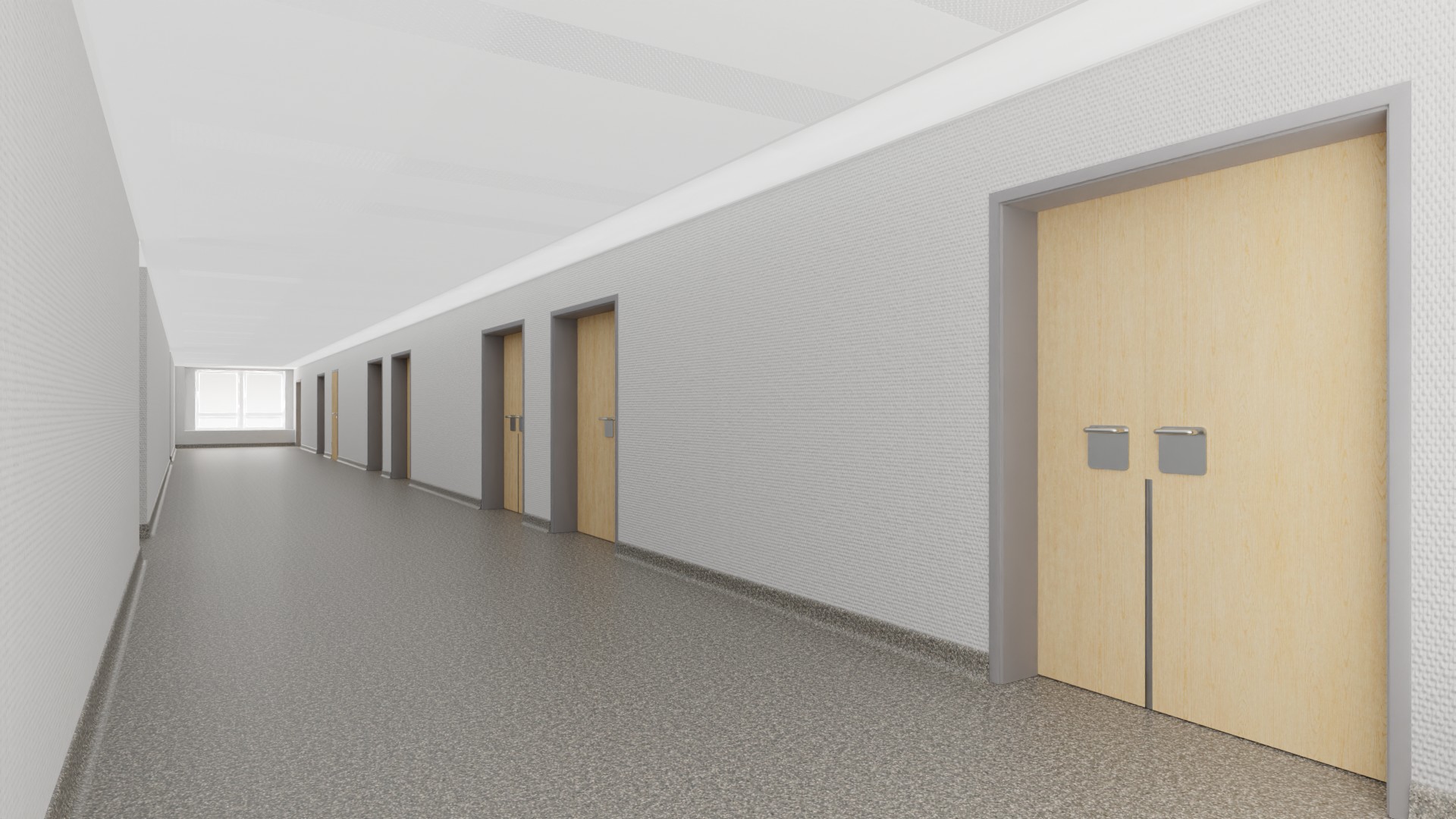
Developed in collaboration with the University Hospital of Cologne, this module immerses medical and nursing staff in a realistic night shift on a surgical ward. The scenario begins with a nursing handover, followed by a routine patient round, until an emergency bell forces the team to respond to an acute patient deterioration.
The patient experiencing the emergency and the type of event, such as acute bleeding, anaphylaxis, or a displaced thoracic drain, are determined by a randomized generator. With 9 different patients and emergency types across 5 difficulty levels (beginner to expert), every training session presents a unique challenge.
Training objectives and evaluation criteria were developed through a rigorous interprofessional Delphi study with 17 medical and nursing experts, achieving 84% consensus on 157 competency items.
Structured primary assessment using the ABCDE approach. Trainees practice situational awareness, vital signs monitoring, blood gas analysis, and FAST ultrasound in a time-critical ward setting.
Role clarity, task delegation, and shared leadership between physicians and nurses. Closed-loop communication, ISBAR handover, and respectful coordination under time pressure are core learning targets.
Non-technical skills for safe emergency care: early escalation, the 10-for-10 principle, reassessment loops, and avoiding fixation errors. Trainees learn when to call for help, not just whether to do so.
The training design and evaluation framework were validated through a five-round modified interprofessional Delphi study involving 17 experts from the University Hospital of Cologne, physicians from Anesthesiology and General Surgery, and nursing educators with experience in surgical emergency settings.
The Delphi process achieved consensus (≥80% agreement) on 131 of 157 competency items (84%), resulting in a structured Case Report Form covering clinical assessment, diagnostic and therapeutic actions, teamwork, communication, time management, and crisis resource management principles.
Consensus achieved across 157 competency items in a rigorous 5-round Delphi process
Expert panelists: Physicians and nursing educators from the University Hospital of Cologne
Different patient emergency scenarios across 5 difficulty levels, from beginner to expert

University Hospital Cologne
Watch the Station VR Training in action. Experience how nurses and physicians coordinate ward emergencies together, from handover to patient round to emergency response and structured debriefing.